Essential Hand Tools Every Beginner Woodworker Needs
Woodworking is a craft that connects the maker directly to the material. For those in Estonia, where woodworking traditions run deep, starting with hand tools offers a foundation that power tools often skip. Hand tools demand patience and precision, but they also provide a level of control and tactile feedback that is difficult to replicate with machines. This article explores the essential hand tools every beginner woodworker needs, focusing on their roles, what to look for in quality, and how to use them effectively.
Beginning with hand tools does not mean avoiding power tools altogether. Instead, it establishes a fundamental understanding of how wood behaves when cut, shaped, and smoothed. Chisels, saws, and planes form the core trio that can handle most initial projects. They are versatile, relatively affordable, and can be maintained with simple techniques. By mastering these basics, you build skills that transfer to any woodworking discipline, from furniture making to joinery.
Selecting the right tools involves more than just picking the shiniest options. Quality varies significantly, and a beginner can be easily overwhelmed by the choices. This guide aims to demystify the process, offering practical advice on what to prioritize and how to care for your tools. The focus is on steady progress and informed decisions, not on achieving immediate perfection.
Choosing Your First Woodworking Chisels
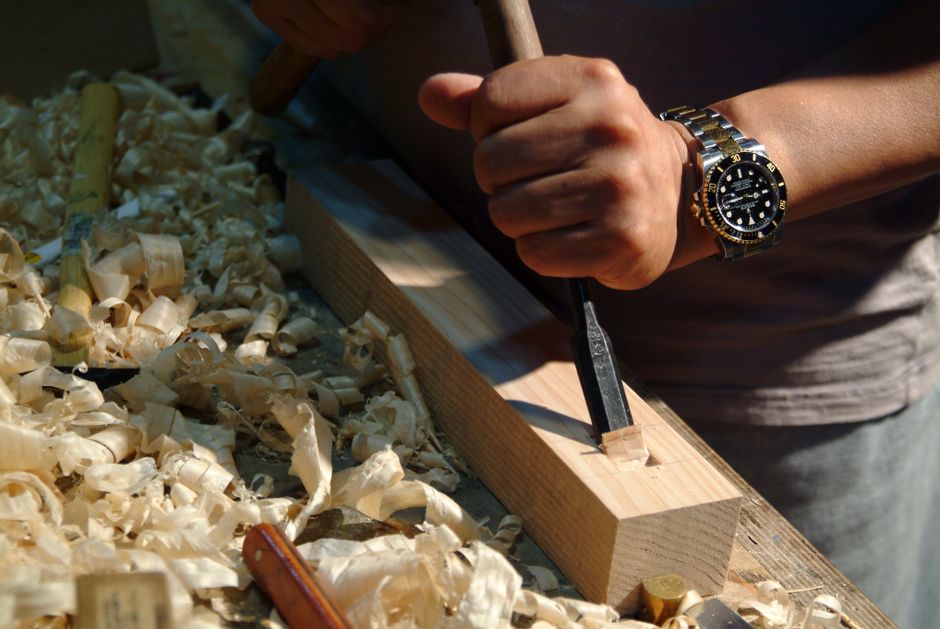
Chisels are arguably the most essential hand tools in a woodworker’s kit. They are used for paring, chopping, and cleaning up joints. For a beginner, a set of three or four chisels in common sizes (such as 6mm, 12mm, 19mm, and 25mm) is sufficient to start. These sizes cover most joinery tasks. When selecting chisels, pay attention to the steel quality. High-carbon steel chisels hold an edge well and are easier to sharpen than some alloy steels. Look for chisels with comfortable handles that fit your grip, and consider the balance between the blade and handle.
Chisels come in two main types: bevel-edged and firmer. Bevel-edged chisels have tapered sides, which allow them to access tight corners and dovetails. Firmer chisels have straight sides and are heavier, built for more forceful work. For general woodworking, a set of bevel-edged chisels is more versatile. When using chisels, always cut away from your body and keep both hands on the tool for control. A mallet is often used for heavier cuts, but for paring, hand pressure alone is usually sufficient. Regular sharpening is essential; a dull chisel is not only inefficient but also dangerous.
Sharpening is a skill in itself. Many beginners start with a simple sharpening stone (whetstone) and a honing guide to maintain a consistent bevel angle. The process involves flattening the back, establishing a primary bevel, and then honing a micro-bevel. With practice, this becomes routine. Investing time in sharpening pays off in improved cutting performance and reduced effort. In the context of Estonia’s craft culture, hand-sharpening is valued as a meditative practice that connects the woodworker to their tools.
Selecting Hand Saws for Precision Cutting
Saws are fundamental for sizing and shaping wood. For beginners, a panel saw with crosscut teeth for cutting across the grain and a rip saw for cutting with the grain are useful. However, many modern woodworkers prefer a Japanese pull saw, which cuts on the pull stroke, allowing for a thinner blade and more precise cuts. These saws are excellent for joinery and dovetail work. For general use, a western-style saw with a stiff back (such as a tenon saw) provides control and precision for straight cuts.
When choosing a saw, consider the tooth configuration. The number of teeth per inch (TPI) determines the smoothness of the cut. A saw with around 12-14 TPI is suitable for dovetails and fine work, while a 8-10 TPI is better for general ripping. The handle should feel comfortable and provide a secure grip. Many beginner woodworkers underestimate the importance of saw technique. Starting the cut with a short, controlled motion on the waste side of the line helps avoid wandering. Use the full length of the blade with long, steady strokes, letting the saw do the cutting.
Saws require minimal maintenance beyond keeping them clean and dry. Periodically, you can lightly oil the blade to prevent rust. Sharpening saws is a complex skill, so many woodworkers send them to professionals or replace blades when dull. However, with proper use, a quality saw can last for many years. In Estonia, where precise woodworking is a point of pride, mastering hand sawing is a worthwhile goal.
Understanding Planes: The Backbone of Smooth Surfaces
A hand plane is essential for flattening, smoothing, and dimensioning wood. For a beginner, a bench plane (such as a No. 4 or No. 5) is the most versatile. A No. 4 smoother is used for final smoothing, while a No. 5 jack plane is used for general stock removal and jointing. Planes allow you to take thin shavings and achieve a glass-like surface, which is deeply satisfying and essential for quality woodworking.
The parts of a plane include the sole, the blade (iron), the chip breaker, the lever cap, and the adjustment mechanisms. A well-tuned plane is a pleasure to use. Key adjustments include setting the blade depth and aligning it properly with the sole. The blade should be sharp and installed with a slight camber to avoid leaving tracks. The chip breaker must mate tightly to the blade to prevent clogging.
Planing technique involves pushing the plane along the grain, with the sole flat on the surface. Start with a slightly deeper cut and gradually reduce the depth for a finishing pass. Avoid planing against the grain, as this can cause tear-out. If tear-out occurs, adjust the cutting depth or change direction. Planes require frequent sharpening, especially if used on hardwoods. Investing in a good sharpening system is crucial. Some woodworkers also use a plane stop or bench hook with clamping mechanisms to secure the wood safely.
In the Estonian context, hand planes are often used in traditional joinery, where precise fitting is paramount. The tactile feedback from a plane cannot be replicated by a power tool, making it a prized skill.
Additional Essential Hand Tools
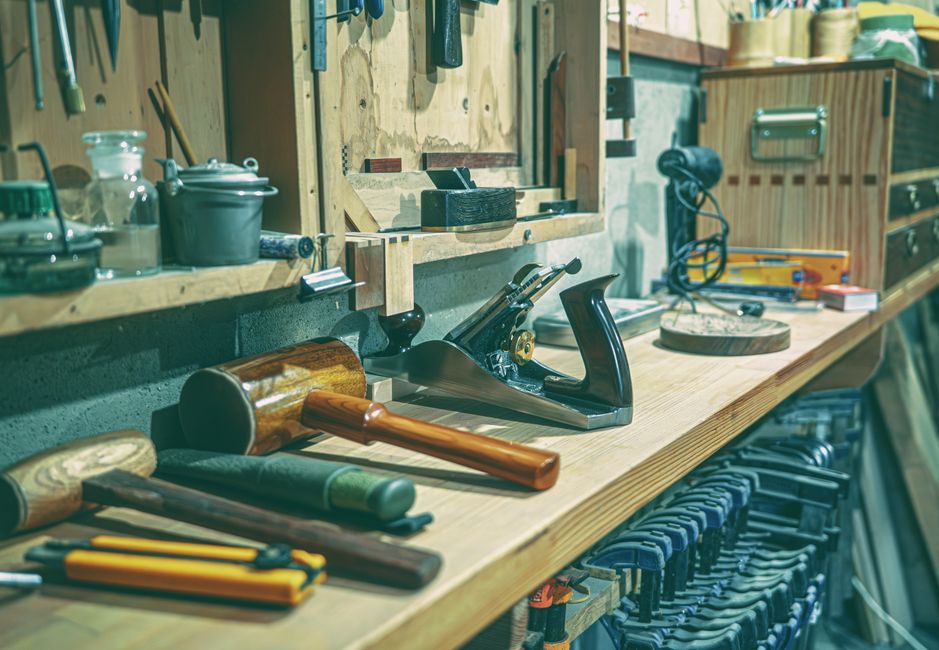
Beyond chisels, saws, and planes, a few other hand tools round out a beginner’s kit. A marking gauge is indispensable for layout, ensuring consistent scribe lines parallel to the edge. A combination square helps verify squareness and measure depths. A good quality hammer or mallet is necessary for driving chisels and assembling joints. A set of screwdrivers and a hand drill with bits are also useful for basic hardware installation.
For cutting curves, a coping saw is an affordable and simple option. It has a thin blade that can turn tight corners, making it ideal for shaping or cutting out patterns. A rasp and files are useful for shaping and smoothing. A workbench with a woodworking vise provides a stable base; if space is limited, a sturdy table with a clamp-on vise can suffice.
One might also consider a block plane, which is smaller and ideal for end grain and easing edges. It is a handy addition to any workbench. Additionally, a mallet made of wood or rubber is gentle on tool handles and is preferred over a metal hammer for chisel work. Each tool serves a distinct purpose, and having the right one on hand improves efficiency and accuracy.
When selecting these tools, prioritize quality and durability. It is better to have a few high-quality tools than many poor ones. Tools are an investment; take care of them by cleaning, oiling, and storing them properly. In Estonia, respecting tools is part of the woodworking culture, and well-maintained tools are often passed down through generations.
Guidelines for Acquiring and Maintaining Quality Tools
Acquiring hand tools can be done gradually. Start with the most essential items and build your collection as you take on more projects. Many beginners find it helpful to purchase tools from reputable brands known for their quality, but even moderately priced tools can perform well if sharpened and tuned properly. It is often recommended to buy vintage or second-hand tools, which can be restored and are sometimes of higher quality than modern equivalents.
When inspecting a used tool, check for pitting, cracks, and excessive wear. The sole of a plane should be flat and free of rust. Chisels should have straight blades and unbroken handles. With a little restoration effort, old tools can serve you well.
Maintenance involves regular sharpening, cleaning, and lubrication. After each session, wipe tools with a lightly oiled cloth to prevent rust. Store tools in a dry place, ideally in a toolbox or roll. Sharpening is a continuous skill; consider taking a class or watching tutorials to improve. In Estonia, there are woodworking communities and workshops where beginners can learn tool care techniques.
Remember that the goal of using hand tools is not only to produce objects but also to enjoy the process. Each tool has its own learning curve, and patience is key. Start with simple projects like a cutting board, a shelf, or a small box, which will exercise your skills without overwhelming you. As you gain confidence, you will naturally expand your tool collection.
The journey of a woodworker is one of continuous learning. Hand tools offer a deep connection to the craft, and mastering them will serve you throughout your woodworking life. Whether you are in Estonia or anywhere else, these tools are a universal language of craftsmanship.